ICS Form 201: A Shared, Scalable Incident Briefing for Outdoor Programs
What an Incident Command System refresher and a summer camp tabletop exercise reminded me about shared, scalable systems, and why FEMA's Incident Briefing form is a tool any outdoor program can pick up tomorrow.
By George Bull ·
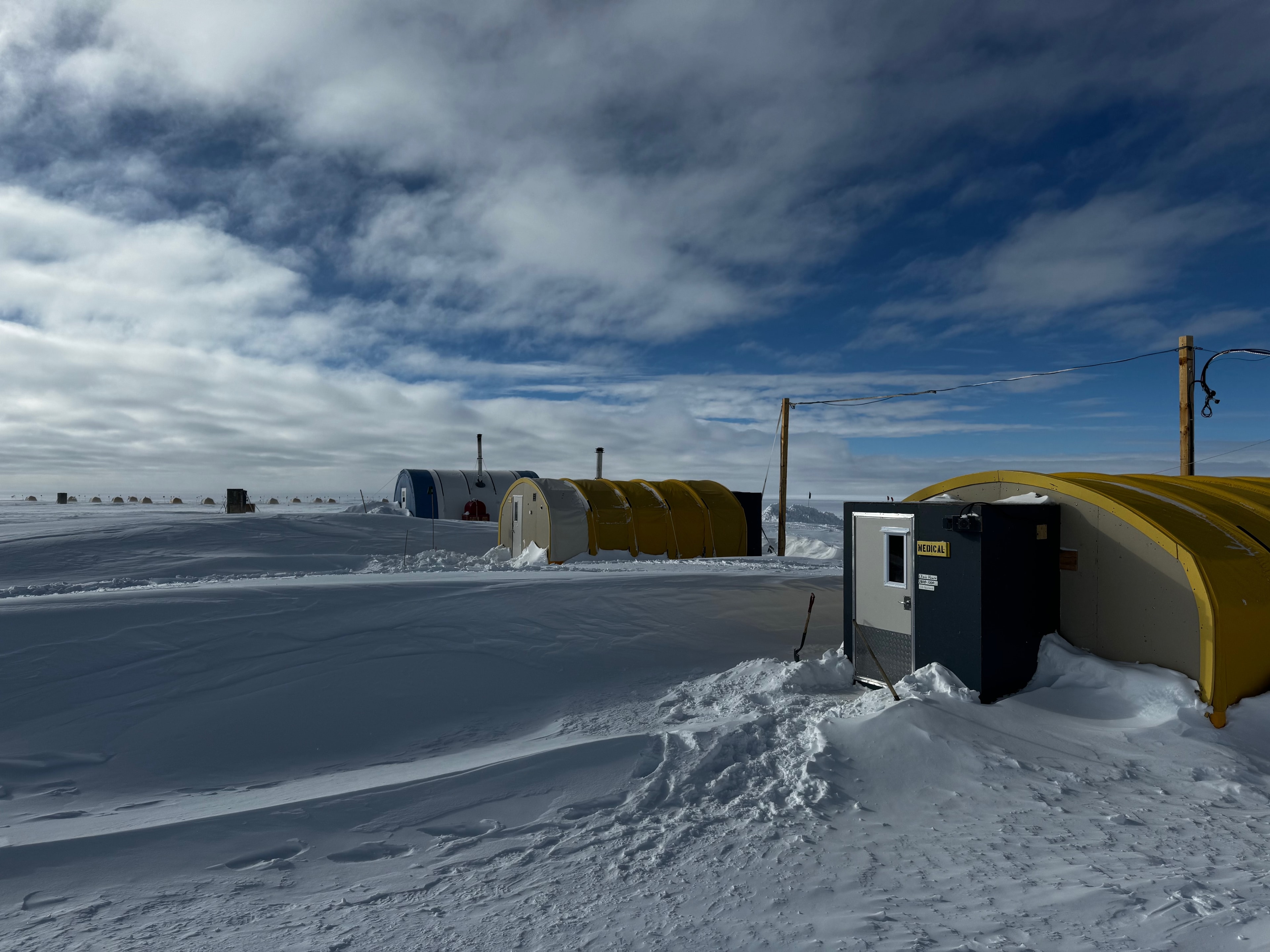
Last month I had the chance to participate as a facilitator in a summer camp incident response tabletop exercise. I have been part of, and designed, incident drills in a lot of settings and roles, from Antarctic deep field camps to summer camp offices. One of my biggest takeaways across all of them has been the importance of shared language and shared systems.
That idea was on my mind again a few weeks later, when I spent a beautiful morning in Madison taking an Incident Command System (ICS) refresher in the form of ICS 200. This post is about why the Incident Command System is worth a look for outdoor programs, and about one form in particular, FEMA's ICS Form 201, that a summer camp or outdoor education program could pick up and start using tomorrow.
The Incident Command System for Summer Camps and Outdoor Programs
When something goes sideways on a trip, the people responding are (typically) not the people who planned it, and the people coordinating the response may not even be in the same room. The trip leader is calling in on a sat phone, and managing the situation in the field. A program manager is in the office. A camp director is in their car, in a grocery store parking lot. Someone is about to call a parent, and someone else is about to call a land manager or a sheriff's office.
In that moment, the quality of your response depends less on any single person's preparation and more on whether everyone is speaking the same language and working from the same playbook. Who is in charge right now? What is the current objective? What has already been done? Who is on scene, and what do we still need? When those questions have a shared format, a handoff between two people takes seconds. When they do not, every handoff starts from scratch, and with heightened stress levels.
That is one problem the Incident Command System was built to solve.
What Is the Incident Command System?
The Incident Command System is the operational backbone of the National Incident Management System (NIMS), the framework developed by FEMA so that agencies of every size can respond to an incident together without inventing a structure on the spot. ICS itself is older than that framework. It grew out of FIRESCOPE, a California interagency response to a series of catastrophic wildfires in the early 1970s, and was folded into the national system later. Fire, EMS, law enforcement, and emergency management all train on it. Because they share a common terminology and structure, organizations that have never worked together can still coordinate from the first minute.
Two features make ICS unusually useful for outdoor programs:
- It is modular. ICS is built around a small set of functions (command, operations, planning, logistics, and finance or administration). In a small incident, those functions can be activated as needed. Your trips manager might step into the operations role; someone comfortable with messaging might take public information.
- It is scalable. The same system that coordinates a large, multi-agency wildfire response also works for a single lost camper or one backcountry medical event. Nothing about the ICS assumes a big organization. It assumes a clear structure, whatever the size.
For a summer camp, a university outdoor program, or a guide service, that combination is the whole point. You are not adopting a system built for somebody else's world. You are adopting a system designed to flex down to your incident and, if it ever needs to, to flex up and connect cleanly to the agencies that show up to help.
ICS Form 201: Add It to Your EOP Binder
If you want a single, concrete place to start, start with ICS Form 201, the Incident Briefing. (ICS 100 and 200 are also great places to start, and they are online and free.)
Form 201 is the form agencies use to capture the early picture of an incident and hand off command. In a handful of pages it records:
- the situation, including a map or sketch of what is happening and where
- the current and planned objectives
- the current actions already underway
- the response organization (who is filling which role)
- a resource summary of who and what is on scene or requested
That is it. It is simple enough that an outdoor program could pick it up tomorrow and find it useful in a real situation, and rigorous enough that the same form scales up to a large, multi-agency incident. It is a clean example: the program director filling one out for a backcountry injury and the incident commander filling one out for a regional response are using the same tool, in the same language.
ICS Form 201 is published by FEMA for free and online. You can download it and print it. FEMA keeps the full set of ICS forms on its ICS Resource Center.
How an Outdoor Program Can Use It
You do not need to reorganize your program around ICS to get value from it. A few low-cost steps go a long way:
-
Adopt the shared terminology. Even agreeing on what "incident commander" means, and that there is exactly one at a time, will increase cohesion during an incident.
-
Keep a blank ICS Form 201 where you can reach it, in your emergency operations plan (EOP) binder. A form you have already practiced is worth far more than a perfect plan nobody has opened.
-
Run a tabletop exercise. A summer camp incident response tabletop exercise is a great way to find the gaps in your plan before a real incident does. Walking a fictional scenario through a 201 shows you fast where your shared language breaks down.
-
Connect it to your own incident reporting. The 201 captures the situation as it unfolds. Your incident report documents the event afterward for your records and your review. The first feeds the second.
Field Risk OS and Incident Response
I founded Field Risk OS™ and am passionate about incident response, so I want to draw this line, but I'm going to draw it carefully.
Field Risk OS is not a replacement for an incident command system, nor is it an incident response tool, and it is not the thing that runs your response. Your program runs your response, using your people and your training. Field Risk OS organizes the information your operations generate, kept on one connected trip record: the pre-departure briefing, the communications log, the incident report, and the documentation your team keeps during an active incident.
A form like ICS Form 201 shares the idea Field Risk OS is built around: a structured snapshot beats scattered notes and memory, both during an event and long after. Form 201 lives in the moment of the incident; the briefing, comms log, and incident report in Field Risk OS are the record your program carries before, during, and after, so the debrief starts from something legible and connected. ICS Form 201 is a great, free place to practice that habit, and Field Risk OS is how I am trying to make it your program's default for everyday operations, beyond incidents.
If your program runs multi-day wilderness trips and you want to talk about how this fits the way you actually operate, I would like to hear from you. Reach me at george@fieldrisksystems.com.
Related: shared language and role clarity are also at the heart of Field Debrief™ podcast Episode 1, where Stuart Slay and I break down Airblue Flight 202 and what Crew Resource Management means for outdoor programs.
Field Risk OS is a documentation and workflow software for outdoor expedition programs.
This article is provided for general informational purposes only and does not constitute professional, legal, or emergency-management advice for your specific program. Programs should seek training through avenues like FEMA's official ICS courses and/or consult qualified advisors when designing operational plans and procedures.